



The Venue Pulse
The monthly briefing for venue & event leaders. Benchmarks, AI trends, and operational wins from 4,000+ venues.
Thousands of companies continue to offer employees the flexibility to work remotely, yet many organizations still expect time spent in the office as part of a hybrid or in-person work model. As employees grow more accustomed to working offsite, organizations face a new challenge: how to make employees want to return to the office.
Organizations must now create intentional experiences that encourage employees to choose the office over alternative work locations. That’s no easy task, considering the convenience of a home office or the quiet of a cozy coffee shop.
Not long ago, it was understood that if you worked somewhere, you physically worked there, at that location, every day. Nowadays, with so many people working remotely at least part of the time, that old concept becomes murky. When work can be done anywhere, getting people to come into the office, even for a few days a week, can be a real challenge.
What Is a Destination Workplace?
A destination workplace is an office environment intentionally designed to attract employees by offering meaningful experiences, connection, and value beyond what remote work can provide.
Rather than serving only as a place to complete tasks, a destination workplace becomes a hub for collaboration, culture, learning, and relationship-building. Employees choose to be there because the environment supports both their professional and personal needs.
In a destination workplace, the office is no longer mandatory. It is purposeful. Employees come in to connect with colleagues, collaborate in shared spaces, participate in events, and engage with leadership in ways that are difficult to replicate remotely.
To encourage onsite work, many organizations are reimagining the office as a destination workplace that supports culture, collaboration, and meaningful connection between employees, teams, and leadership. Corporate facility managers play a key role by using office real estate to bridge the gap between onsite and remote employees. The office essentially becomes a “destination workplace” that draws people back.
So, how do companies make the office into a destination workplace? Here are three ways.

Office-Exclusive Perks That Encourage Employees to Return
Give employees extra incentives they can’t get at home that offer a sense of belonging and community. Those can include things like in-office health and wellness checks, nutrition classes, team-building events, and ways to unwind during lunch breaks – think 15-minute massages or a quiet room dedicated to mental breaks and meditation. You can even hold annual onsite flu vaccinations as part of your workplace wellness program. Encourage employees to take advantage of these perks, and make sure to stress that they’re only available onsite. Leverage your office real estate to create dedicated spaces for different uses.
Here’s another big incentive: Free stuff. Who doesn’t love to get something for free? Free food, free drinks, free Wi-Fi, free cable in the breakroom… it’s all good. This doesn’t have to mean a full buffet spread for everyone every day. Most budgets won’t allow for that. Even if it’s just free coffee and cookies, it’s still something employees can only get by coming into the office. Plus, free coffee and snacks in the office means employees don’t need to stop what they’re doing to leave and get it themselves, which maximizes time in their workdays.

Culture and Intangible Experiences That Define a Destination Workplace
Becoming a destination workplace isn’t just about the physical location. Employees don’t choose to work for a company just because it has nice offices (though it doesn’t hurt). Now that remote work is the norm, the state of the office isn’t nearly as important as other factors like salary, benefits, and bonuses like flexible schedules.
Organizations must create value-driven experiences that make onsite work worthwhile. Amenities and benefits add value, plus they’re crucial to attracting new hires and holding onto the people you have now. Consider how onboarding experiences differ for employees who rarely meet peers in person. What’s that experience like for them? Employees choose companies not just because of what they do, but also because of how they do it.
Having a pulse on what workers want and need can help you add more value. Employee surveys and feedback tools provide valuable insight into what employees value most. Use that information to make things better for current and future employees. Don’t stop at just one survey – continue to listen to workers and always maintain an open, honest dialogue.
Another important factor is supporting a healthy work-life balance. Working from home definitely has its good side, but it’s much harder to disconnect once the day is done. It’s tempting to read after-hours work emails when all you have to do is take a short walk from the couch to the computer. Working onsite allows employees to establish clearer boundaries between work and personal life. There’s a hard “closing time,” letting people unplug and shift focus back to their personal lives.
Easy Space Booking That Supports Collaboration
Ultimately, employees must be able to easily use the office space available to them. Shared office spaces like conference rooms or classrooms are excellent places to collaborate with peers, entertain clients, or hold trainings. If reserving shared spaces is overly complex, employees are less likely to use them, regardless of quality.
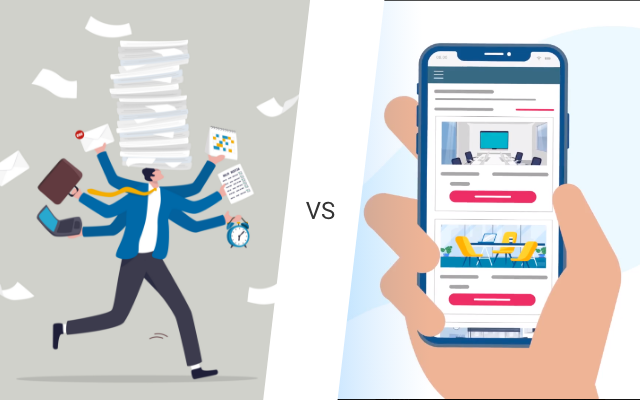
Make it easy for people to book shared space by using technology. An online booking platform lets employees reserve rooms for in-person meetings and brainstorming sessions that can help strengthen relationships, establish trust, and amplify productivity.
A dedicated booking platform helps support a destination workplace by improving access, visibility, and usability of office spaces. The portal lets people check space availability, see event details, and make bookings quickly and easily. Employees get an ideal booking experience that encourages them to meet in person, boosting the sense of community across the entire organization. Larger, more complex events can be handled, too, with convenient self-service tools that guide users through the entire booking process, from space selection to audio/visual requests.
A destination workplace is a thoughtfully designed experience that promotes emotional connection between employees, colleagues, and the organization. We know it’s hard to compete with home offices and coffee shops. By combining onsite-only perks, supportive culture, and user-friendly space booking technology, organizations can create a destination workplace employees genuinely want to be part of.
Benefits of Creating a Destination Workplace
Creating a destination workplace offers benefits that extend beyond attendance. When designed thoughtfully, these environments support a stronger culture, higher engagement, and improved collaboration.
Employees who feel connected to their workplace are more likely to participate, communicate openly, and remain engaged with their teams. A destination workplace also supports onboarding, mentorship, and innovation by bringing people together in shared spaces.
From a business perspective, destination workplaces help organizations maximize the value of their real estate, improve space utilization, and strengthen employee retention in competitive labor markets.
Supporting a Destination Workplace at Scale
For organizations managing large office environments, corporate campuses, or multi-building workplaces, creating a destination workplace requires more than thoughtful design. It depends on having the right systems in place to support how people actually use and experience the space.
As teams coordinate meetings, company events, shared amenities, and collaborative programming, complexity naturally increases. This is where modern event management software and venue management software play a critical role. Platforms like Momentus help centralize bookings, streamline approvals, and provide visibility into space usage across locations.
With connected systems and better data, organizations can deliver consistent, high-quality workplace experiences that encourage people to return, engage, and stay connected. The right technology helps ensure destination workplaces remain both inviting and operationally efficient as needs evolve.
See what your venue is missing
Explore the platform trusted by SoFi Stadium and the Apollo Theater to fill more dates, streamline operations and maximize revenue


.avif)

.svg)